This project is led by Geng Guoqing, Principal Investigator of the National University of Singapore Guangzhou Research Translation and Innovation Institute (NUS GRTII) and Assistant Professor at the Department of Civil and Environmental Engineering, National University of Singapore. As a prominent expert in cement-based materials, Assistant Professor Geng Guoqing proposes to solidify solid waste ash residues by utilizing the cementitious properties of cement-based materials, and apply the treated materials to land reclamation projects. The research team members include Liu Hongyang (PhD student, recipient of the PhD Scholarship of NUS GRTII), postdoctoral researchers Xiong Lianyao, Zhang Zhe, as well as PhD candidate Gao Yu.
Targeting municipal solid waste incineration ash, the research systematically explores the resource utilization approaches of such waste for large-scale land reclamation engineering. The ongoing study will subsequently concentrate on critical issues such as the evolution law of long-term mechanical properties and the optimization of large-scale construction processes.
Research Background
Rapid urbanization, economic development, and population growth have led to a continuous increase in global solid waste generation, making waste management a major environmental and engineering challenge. Municipal solid waste (MSW), which consists of mixed solid residues from households, commercial activities, and public services, represents a significant proportion of total waste production. With the human civilization development, the amount of municipal solid waste treated through incineration has continued to increase, making the large-scale disposal and resource utilization of incineration ash an increasingly prominent challenge.
Meanwhile, the limited land resources in coastal areas has intensified the need for land reclamation. Finding ways to make effective use of solid waste materials while meeting the requirements of engineering safety and environmental protection has therefore become an important topic in both civil and environmental engineering. In this context, this study examines the feasibility of using incineration ash in reclamation works through a series of systematic investigations. The aim is to provide technical insights that can support sustainable coastal development and promote more efficient utilization of solid waste resources.
Highlights/Major Discoveries
This study adopts a cementitious stabilization approach to improve the mechanical performance, erosion resistance, and long-term stability of municipal solid waste incineration ash. By combining laboratory investigations with large-scale field trial tests, the behaviour of the stabilized MSWI ash under reclamation conditions has been systematically examined. In particular, the research clarifies:
(i) The time-dependent evolution of the mechanical performance of stabilized ash under different mix formulations was systematically investigated, revealing the mechanisms of strength development and structural stabilization.
(ii) The influence of cement stabilization on the flowability and anti-washout behaviour of stabilized ash was evaluated. Based on target workability requirements for large-scale engineering practice, optimized mix design strategies were established to achieve required workability under marine conditions.
(iii) Several novel cement stabilization formulations were developed. Through the binding and encapsulation effects of cement hydration products, heavy metals present in incineration ash were effectively immobilized. The stabilization performance under different mix proportions was systematically evaluated to ensure both environmental safety and engineering applicability of the treated material.
In addition to material characterization, the research team has been actively involved in the design of the full construction process for practical implementation. This includes key stages such as excavation, crushing, screening, material preparation, transportation, and placement in reclamation works, with the aim of establishing an efficient and technically sound construction workflow. To date, engineering design work has been completed for the excavation, crushing, screening, and material preparation stages, providing an important basis for subsequent large-scale field application.
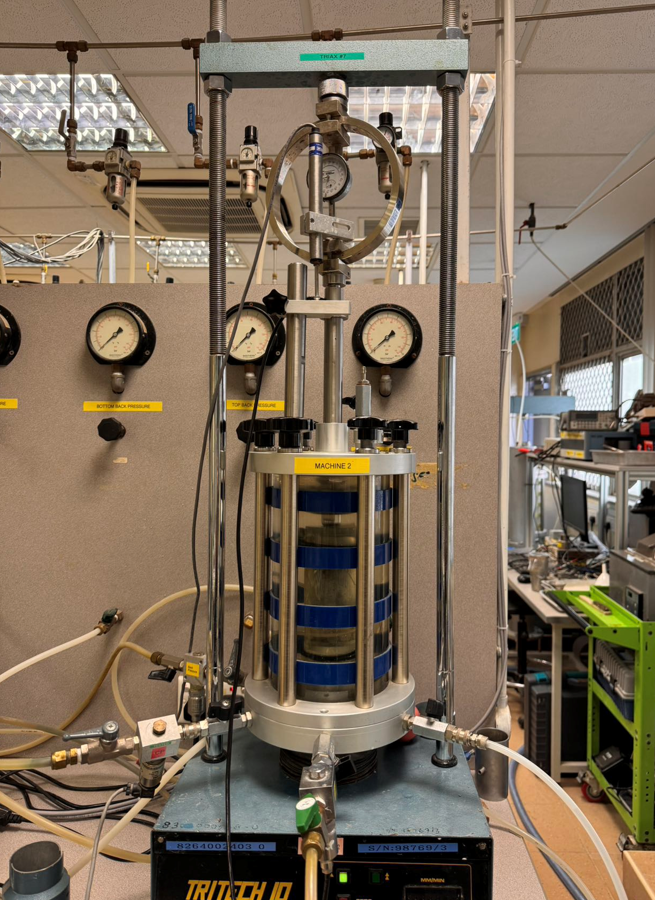
Laboratory mechanical parameter testing equipment (triaxial compressor)
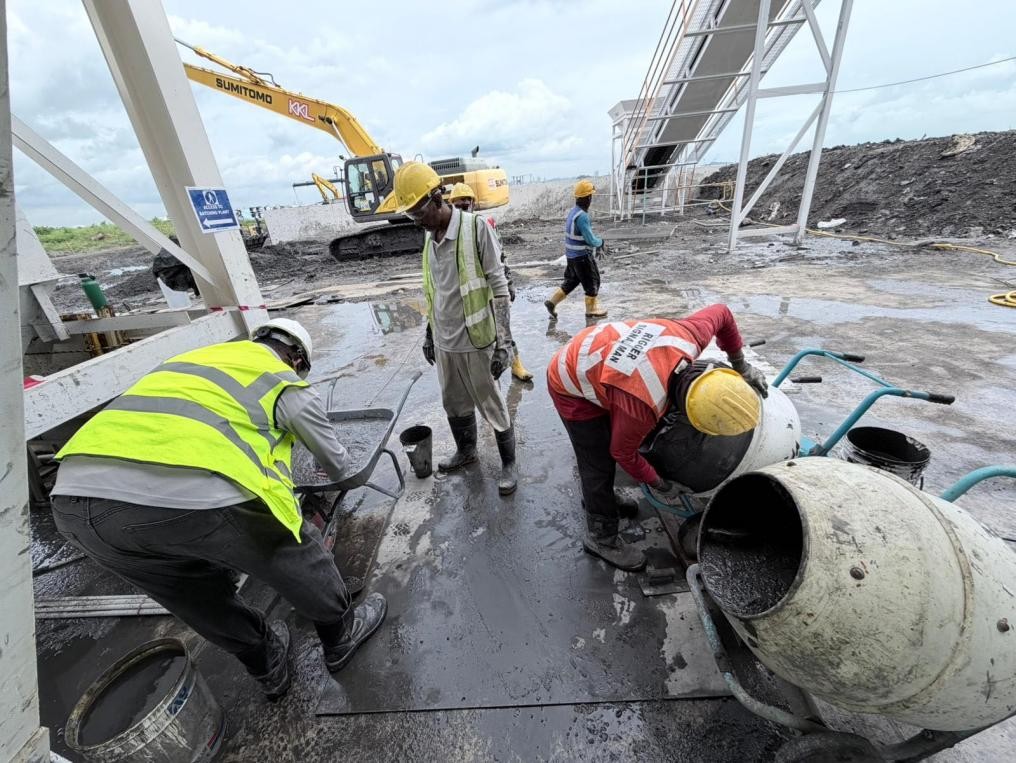
On-site performance testing of large-scale samples
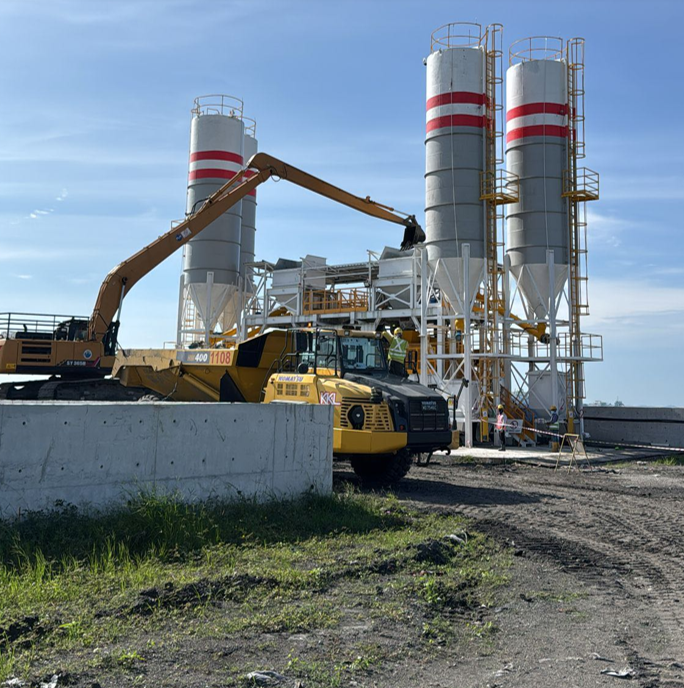
Solid waste ash residue solidification mixing station
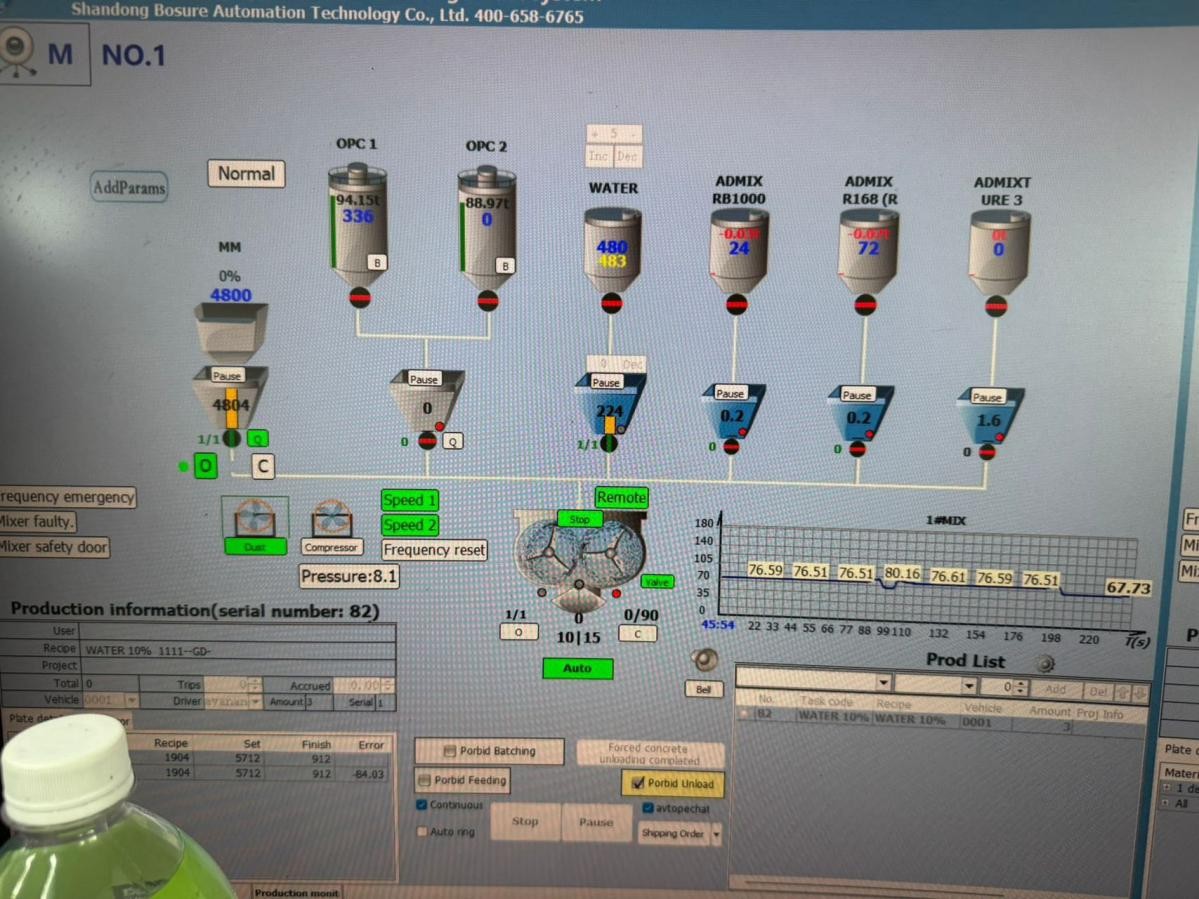
Fully automated production control center
Application Scenarios and Collaboration Needs
The cement stabilization technology for municipal solid waste incineration ash (CT-MM) proposed in this study is applicable to a wide range of engineering scenarios, including large-scale coastal land reclamation, port and navigation infrastructure construction, coastal industrial zone development, and shoreline protection projects. The technology enables the resource utilization of solid waste while meeting the requirements for foundation bearing capacity and long-term chemical stability, thereby offering favourable engineering, economic, and environmental benefits.
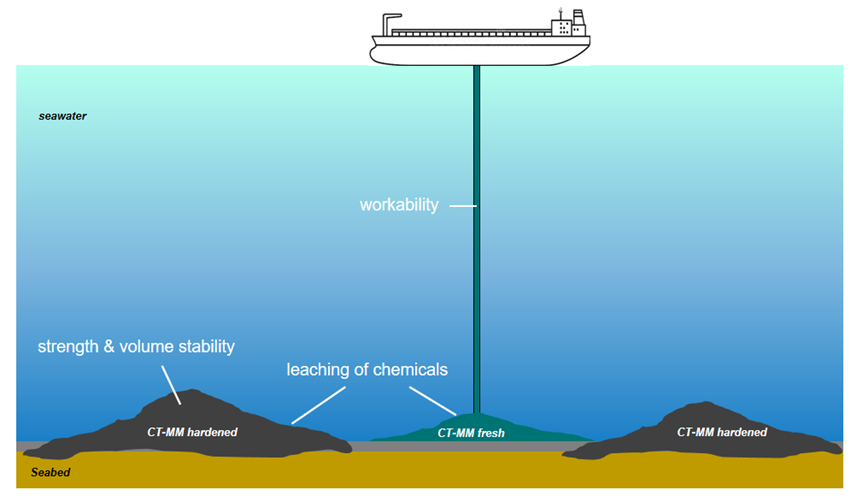
Schematic Diagram of Pouring of Solid Waste Ash Residue
Should you have any intention for cooperation, please feel free to contact us:research@nusgrtii.cn